

Celebrating St. Jane’s Feast Day
Homily for the Feast of St. Jane de Chantal
One of the things I find most beautiful about the life of St. Jane de Chantal is that she was not called to just one particular way of life.
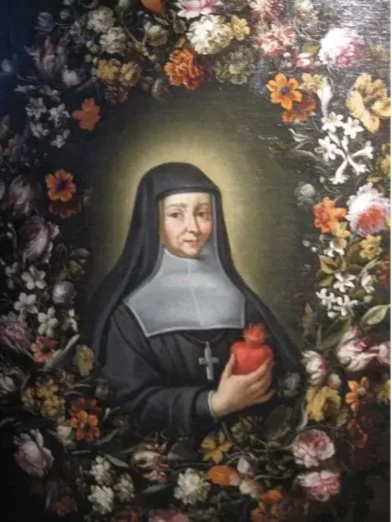
She was a daughter.
She was a wife.
She was a mother.
She was a widow.
And eventually, she became a religious and the foundress of a new community of women.
And yet, through all of those different chapters of her life, there was one constant: she was learning how to belong to God. That is what makes today's Gospel especially appropriate for her feast.
Jesus is told that His mother and His relatives are outside looking for Him. And he responds with what might initially sound like a strange question: “Who are my mother and my brothers?” Then he looks around at those seated before Him and says: “Here are my mother and my brothers. For whoever does the will of God is my brother and sister and mother.” Jesus is not diminishing the importance of His mother or His family. Rather, He is expanding our understanding of what it means to belong to Him. Our deepest identity is not simply determined by our family role, our profession, our accomplishments, or even by the circumstances of our lives.
Our deepest identity is that we belong to God and seek to do his will.
That is something St. Jane de Chantal learned over and over again.
Jane grew up in a loving and privileged home. She was intelligent, capable, and deeply formed in faith by her father. As a young woman, she married Baron de Chantal and became a devoted wife and mother. She managed the family estate, cared for her children, welcomed her husband's friends, and created a home filled with hospitality. She could easily have thought: This is my vocation. This is where God has placed me. And it was.
But then, at only twenty-eight years of age, tragedy came. Her husband was accidentally killed in a hunting accident. Suddenly, the life she had known was gone. She became a widow with four young children. She had to manage an estate, care for her family, and somehow find her way through grief. And then she was asked to live with her father-in-law, where for seven years she endured difficult circumstances and the unreasonable demands of another person. It would have been understandable if Jane had become bitter. Instead, she learned to turn even those difficult circumstances into an occasion for faithfulness, service, charity, and prayer.
That is where the first reading speaks so powerfully to her: “Blessed is the woman who fears the Lord. She reaches out her hands to the poor and extends her arms to the needy.”
The Book of Proverbs does not describe holiness as something spectacular. It describes a woman who works, serves, cares for others, reaches out to the needy, and faithfully fulfills the responsibilities entrusted to her.
That was Jane: Her holiness was not simply found in the convent she would eventually establish. Her holiness began in the ordinary responsibilities of family life. And perhaps that is an important reminder for us. Sometimes we imagine that holiness begins when our circumstances become perfect—or when we finally have time for prayer, or when we are free from difficult people, difficult responsibilities, or difficult situations.
Jane's life tells us otherwise: Holiness is learning to love God faithfully in the circumstances in which we find ourselves.
When she was a wife, she sought holiness as a wife.
When she was a mother, she sought holiness as a mother.
When she became a widow, she sought holiness as a widow.
When she had to endure a difficult relationship with her father-in-law, she sought holiness there.
And eventually, when God called her to religious life, she sought holiness as a religious and as the mother superior of the Visitation.
Her circumstances changed. Her vocation changed.
But the fundamental question remained the same: How is God asking me to love Him and to love others here and now? That is one of the reasons her friendship with St. Francis de Sales was so providential. Francis helped Jane understand that holiness was not about becoming someone she was not. It was about becoming the person God had created her to be and learning to respond faithfully to God's grace in the concrete circumstances of her life.
And that may be why one of St. Jane's sayings is particularly worth remembering today: “Though we should fall fifty times a day, let us rise again quite simply.” I love that word: simply. Jane knew that holiness does not mean never failing.
It means getting up again.
It means not becoming paralyzed by our mistakes.
It means not spending all of our energy looking backward and saying, I should have done this differently. I should have been more patient. I should have said this instead. I should have known better.
Jane says that such discouragement can actually become another fault.
Instead: Fall. Get up. Ask God's forgiveness. Receive His grace. And begin again.
That is a very Salesian understanding of holiness.
And it connects beautifully with Jesus' words in today's Gospel, “Whoever does the will of God is my brother and sister and mother.” Jesus does not say, “Whoever gets everything right.” He says, “Whoever does the will of God.” And doing God's will is not necessarily one dramatic decision that determines the rest of our lives. More often, it is discovered one day at a time.
What is God asking of me today?
Whom is God asking me to love today?
Where is God asking me to be patient today?
Who needs my forgiveness?
Who needs my attention?
Where is God asking me to begin again?
St. Jane de Chantal's life reminds us that God can lead us through many different chapters.
Some we choose. Others are chosen for us.
Some chapters are filled with joy. Others with grief.
Some with fulfillment. Others with uncertainty.
Some with people who make our lives easier.
Others with people who test our patience and our charity.
But through every chapter, God remains faithful. And perhaps the greatest lesson of St. Jane's life is this: We do not have to know the whole story in order to be faithful to the next chapter. Jane could not have known, when she became a young widow, that God would eventually bring her to Annecy, introduce her to Francis de Sales, and use the two of them to establish the Visitation. She simply tried to be faithful to what was in front of her. And God did the rest.
So today, we ask St. Jane de Chantal to pray for us—not that our lives will be free from difficulty, but that we might discover God within whatever our lives bring.
May she teach us to be faithful in the ordinary things.
May she teach us to serve generously.
May she teach us to persevere through suffering.
May she teach us not to be discouraged by our failures.
And, above all, may she teach us to keep asking the simple but profound question that shaped her entire life: “Lord, what is Your will for me today?”
And then, having heard the answer, may we have the grace simply to get up and do it.
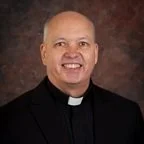
Fr. Ed Odgen, OSFS
Pastor, St. Margaret of Scotland Parish